Care for and store silver chains properly
Silver necklaces are among the pieces of jewelry that look effortlessly elegant: fine enough for every day, noble enough for special moments and can be combined in many ways with minimalist looks. However, in order for them to remain beautiful for a long time, they need the right care. Real silver can tarnish, fine chain links can become discolored, and improper storage will quickly lead to scratches or knots.
The good news: You don't need a complicated routine. If you understand why silver reacts and which cleaning method suits which material, your silver chains will stay shiny much longer. This guide will show you how to properly clean silver chains, protect them from tarnishing and store them so that they are always ready to hand and look well cared for in everyday life.

Why silver chains tarnish
Tarnishing is normal for silver and is not a sign of poor quality. Silver reacts with certain sulfur compounds from the air, skin, sweat, cosmetics or environmental influences. This creates a darker surface, often called silver sulfide. The Royal Society of Chemistry also describes that silver is stable in pure air and water, but can tarnish due to sulfur compounds.
Chains in particular are vulnerable because they lie directly on the skin. Perfume, body lotion, sunscreen, hairspray and sweat settle between the limbs. Moisture also accelerates visible changes. If a necklace ends up in an open dish after being worn, uncleaned, it gets exactly the combination that silver doesn't like: air, residue and friction.
It is also important: Not every silver-colored chain is made of solid silver. Some chains are made of 925 sterling silver, others are silver-plated, rhodium-plated or silver-colored stainless steel. The care differs significantly.
First check the material: not all silver is the same
Before you clean a chain, you should know what material you have in front of you. With an unknown chain, the gentlest method is always the safest. Aggressive silver baths or home remedies can cause more damage than good to coated, silver-plated or stone-studded necklaces.
| material | Typical features | Appropriate care | Be careful |
|---|---|---|---|
| 925 sterling silver | Often stamped 925, may visibly tarnish | Silver cleaning cloth, mild soapy water, dry thoroughly | Chlorine, strong rubbing, aggressive baths |
| Rhodium plated silver | Cool, very bright shine, tarnishes more slowly | Soft microfiber cloth, very mild cleaning | Abrasive polishes because the rhodium layer can suffer |
| Silver plated chain | Thin layer of silver over other metal | Just wipe gently, little moisture | Silver polishing, scrubbing, long water baths |
| Silver colored stainless steel | Silver look, often very suitable for everyday use | Microfiber cloth, mild water, store in a dry place | Harsh chemicals, chlorine, rough sponges |
If you are unsure, treat the necklace as you would a delicate, plated piece of jewelry. This means: no scrubbing, no soaking, no strong cleaning agents and no experiments with acids.
Clean silver chains properly: the gentle basic routine
For most silver chains, gentle cleaning is sufficient. Prepare a soft microfiber cloth, lukewarm water, a little mild detergent without harsh additives, a very soft toothbrush and a lint-free cloth. Always work over a bowl or closed drain to avoid losing the chain.
- Wipe dry: First, wipe the chain with a soft cloth to remove oil, dust, and light debris.
- Clean briefly with lukewarm water: Add a drop of mild dish soap to lukewarm water and gently move the chain around. Long soaking is not necessary.
- Gently loosen fine gaps: For link chains, you can touch the clasp and heavily soiled areas with a very soft brush, but do not scrub.
- Rinse thoroughly: Remove all soap residue, as residue can reduce the shine and promote new deposits.
- Dry completely immediately: Blot the necklace and let it dry open on a soft cloth before storing it.
This method is particularly suitable if your necklace only looks slightly dull or has residue from cream and everyday use. If 925 silver is heavily tarnished, a special silver cleaning cloth can help. Use it with little pressure and do not pull the chain through the cloth too tightly so that delicate links are not stressed.
A silver bath is not inherently wrong, but it is not a standard solution for every necklace. It should only be used if the chain is made of suitable, insensitive silver and does not have any delicate stones, beads, coatings, splices or intentional oxidation. Always read the cleaning product instructions and rinse the chain thoroughly afterwards.
You should avoid these cleaning mistakes
Many well-known home remedies sound practical, but are risky for jewelry. Toothpaste can contain fine abrasive particles and cause micro-scratches. Baking powder or baking soda are often recommended for polishing, but can also damage the surface if rubbed too hard. Lemon juice and vinegar are unsuitable for sensitive coatings, stones and adhesive areas.
Chlorine is also a common mistake. Swimming pool water, bleach and some household cleaners can corrode silver and other jewelry materials. If your necklace comes into contact with such substances, rinse it with clean water and dry it carefully immediately.
Ultrasonic devices are also not useful for every chain. They can work on sturdy metal pieces, but can be problematic on stones, settings, bonds, or very fine links. For valuable heirlooms or jewelry with gemstones, professional cleaning is safer.
The best everyday care: small habits with a big impact
Care doesn't just start with cleaning, but with wearing it. A simple rule is: put jewelry on last and take it off first. This means your necklace comes into less contact with perfume, make-up, hairspray, sunscreen or body lotion.
Remove silver chains before exercising because sweat and friction can promote tarnishing. It is also better to remove fine chains when sleeping. They can get caught in textiles, kink or tear. When showering, the following applies: Real silver can often tolerate occasional contact with water, but constant moisture is unfavorable. Dry the chain immediately if it gets wet.
If you wear multiple necklaces layered, make sure they don't constantly rub against each other. Different lengths not only help with styling but also reduce knots. If you are looking for inspiration for harmonious combinations, you can find it in the Chain layering instructions more practical tips.
Store silver chains properly
Storage often determines whether your chain will still shine fresh after weeks or whether it will already appear dull and dark. Silver likes it dry, dark and, if possible, protected from air. The bathroom is one of the worst places for silver necklaces because humidity and temperature fluctuations are particularly common there.
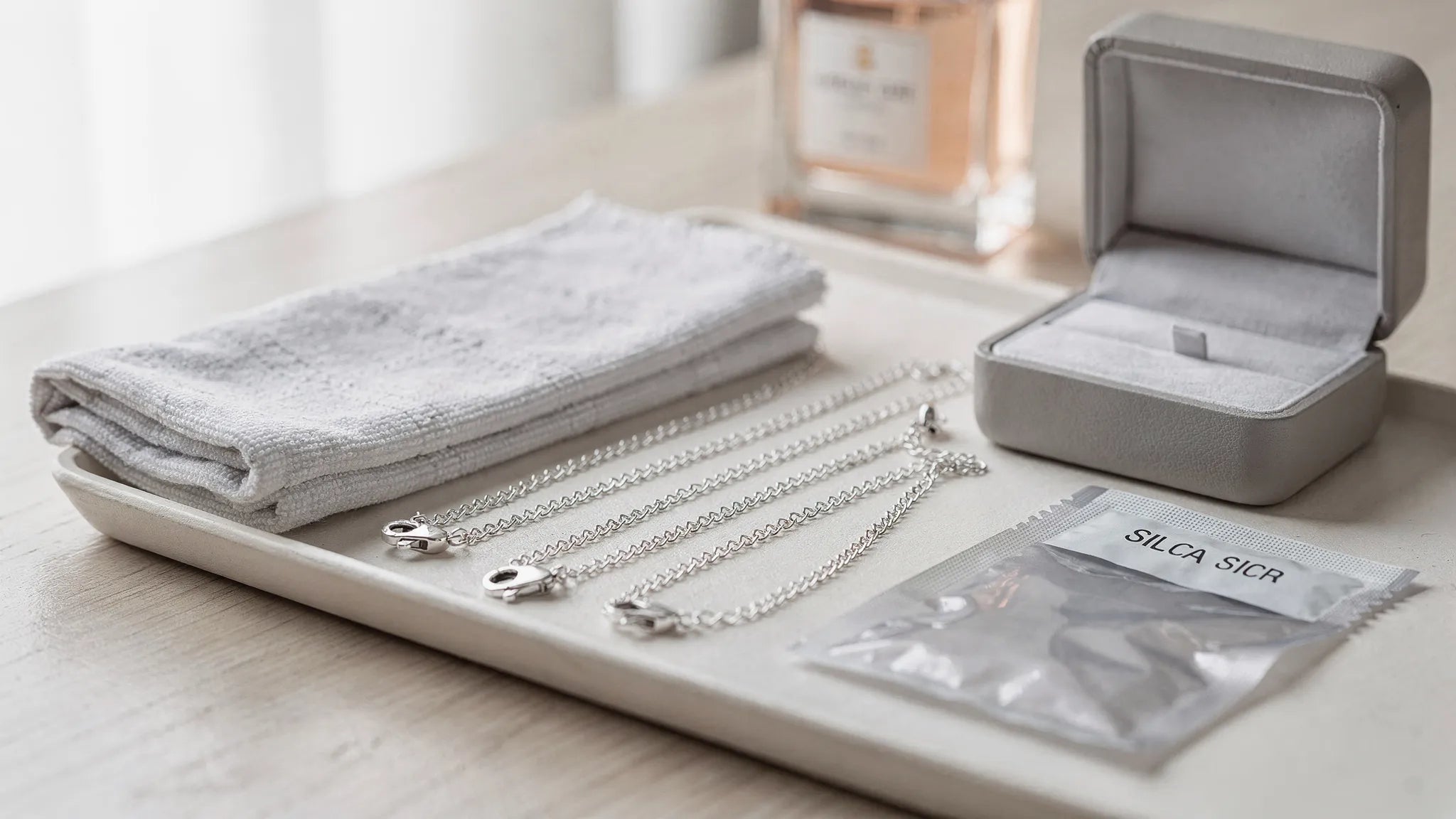
Store each chain individually. A soft jewelry bag, a separate compartment in the jewelry box or a small, suitable zip bag protects against scratches and prevents knots. Close the clasp before storing to prevent the chain from twisting. If you have very fine chains, lay them long in a narrow compartment instead of rolling them up loosely.
For additional protection, you can place anti-tarnish strips or a small silica gel packet in the jewelry box. It is important that the jewelry is dry before it is stored closed. A damp chain in a bag with little air is not a good idea because residual moisture can promote stains and deposits.
| situation | Best storage | Why it helps |
|---|---|---|
| Daily wear | Own compartment in a closed jewelry box | Protection against dust, light and friction |
| Longer break | Dry necklace individually in a jewelry bag or suitable zip bag | Less contact with air and slower start-up |
| trip | Individual mini pouch or travel case with compartments | No tangles, fewer scratches in your luggage |
| Bathroom | Better to avoid | High humidity accelerates tarnishing |
What applies to pendants, engravings and birthstones?
Necklaces with pendants need a little more attention. Residue collects particularly easily between the eyelet, pendant and chain. After cleaning, you should dry these areas carefully because water stays there longer than on smooth surfaces.
The following applies to engraved pendants: do not scrub roughly over the engraving. Fine indentations can be cleaned with a dry, soft cloth and a little patience. If the engraving is very dirty, a short, mild cleaning followed by thorough drying is usually sufficient.
When it comes to necklaces with stones, the most sensitive material always counts. Pearls, opals, turquoise and some treated stones are sensitive to water, chemicals and ultrasound. The GIA Gem Care Guide shows that gemstones require very different care depending on the type. If you have a necklace with a birthstone or gemstone, you should not automatically resort to silver care, but rather pay attention to stone care first.
A simple care plan for a lasting, beautiful shine
You don't have to clean your silver chain intensively after every wear. The key is regularity without exaggeration. Polishing too often can stress coatings, while cleaning too infrequently can cause residue to solidify.
| point in time | What you should do | Duration |
|---|---|---|
| After wearing | Wipe with a soft cloth and store in a dry place | 30 seconds |
| Once a week if worn frequently | Check the clasp and chain for residue | 1 to 2 minutes |
| If dullness is visible | Clean gently with lukewarm water and dry completely | 5 minutes |
| In case of strong start-up | Use a silver cleaning cloth or professional cleaning | Depending on the condition |
| Before long-term storage | Clean, dry, pack individually and protected from air | 5 minutes |
This care plan is especially helpful if you wear your favorite necklace almost every day. It prevents dirt and tarnish from settling so strongly that intensive cleaning is necessary later.
Silver look with less care: stainless steel as an alternative
Many people are looking for silver necklaces, but are primarily looking for the cool, clear silver tone. If you love this look but want to wear jewelry that is as uncomplicated as possible in everyday life, silver-colored stainless steel can be an interesting alternative.
Stainless steel tends to tarnish significantly less compared to real silver and is robust for everyday looks. LUMOIR Jewelry focuses on timeless stainless steel designs with minimalist, French-inspired aesthetics. Many designs are water-resistant and intended for men and women. Nevertheless, the same applies here: After contact with sweat, salt water, chlorine or cosmetics, it makes sense to wipe and dry briefly so that the jewelry looks well-groomed for a long time.
If you're looking for more inspiration for the cool metal look in everyday life, the guide is also worth it Style silver jewelry elegantly in everyday life. For general care tips for fashion jewelry, you can also find the guide How do you properly care for costume jewelry?.
Frequently asked questions about silver necklaces
How often should I clean silver chains? If you wear it frequently, it is usually sufficient to briefly wipe the chain with a soft cloth after taking it off. More thorough cleaning with mild water is only necessary if it appears dull or if residues are visible.
Can I shower with a silver chain? Better not regularly. Single contact with water is often not a problem, but soap, shampoo, limescale and moisture promote deposits and tarnishing. Dry the chain immediately if it gets wet.
Why is my silver chain turning black? This is usually tarnishing caused by sulfur compounds, skin contact, cosmetics, sweat or humidity. This is normal for 925 silver and can often be improved with a silver cleaning cloth.
Are silver baths suitable for every silver chain? No. Silver baths can work for certain durable silver pieces, but are risky for silver-plated, rhodium-plated, oxidized, or stone-studded necklaces. If in doubt, it is better to clean gently or seek professional advice.
How do I prevent silver chains from tangling? Store each necklace individually, close the clasp and place fine necklaces elongated in a separate compartment or small jewelry bag. Cases with separate compartments are suitable for travel.
Which is easier to care for: 925 silver or stainless steel with a silver look? Stainless steel is usually easier to care for in everyday life because it is less prone to the typical silver tarnishing. 925 silver has the classic precious metal character, but requires more care and careful storage.
Conclusion: What remains beautiful is what is gently cared for
Silver necklaces do not require complex treatment, but rather consistent, gentle care. Wipe dry, reduce cosmetics and moisture, store individually and only gently clean when necessary: With these habits, the shine will be retained for longer and your necklaces will always be ready for the next look.
If you love the clear silver look and are looking for everyday jewelry, discover the minimalist designs from LUMOIR Jewelry. The collection combines timeless shapes, stainless steel, personalized options and jewelry for women and men. You also benefit from secure payment, a 14-day return policy and free shipping for orders over 50 CHF.

From Yannick Aebischer