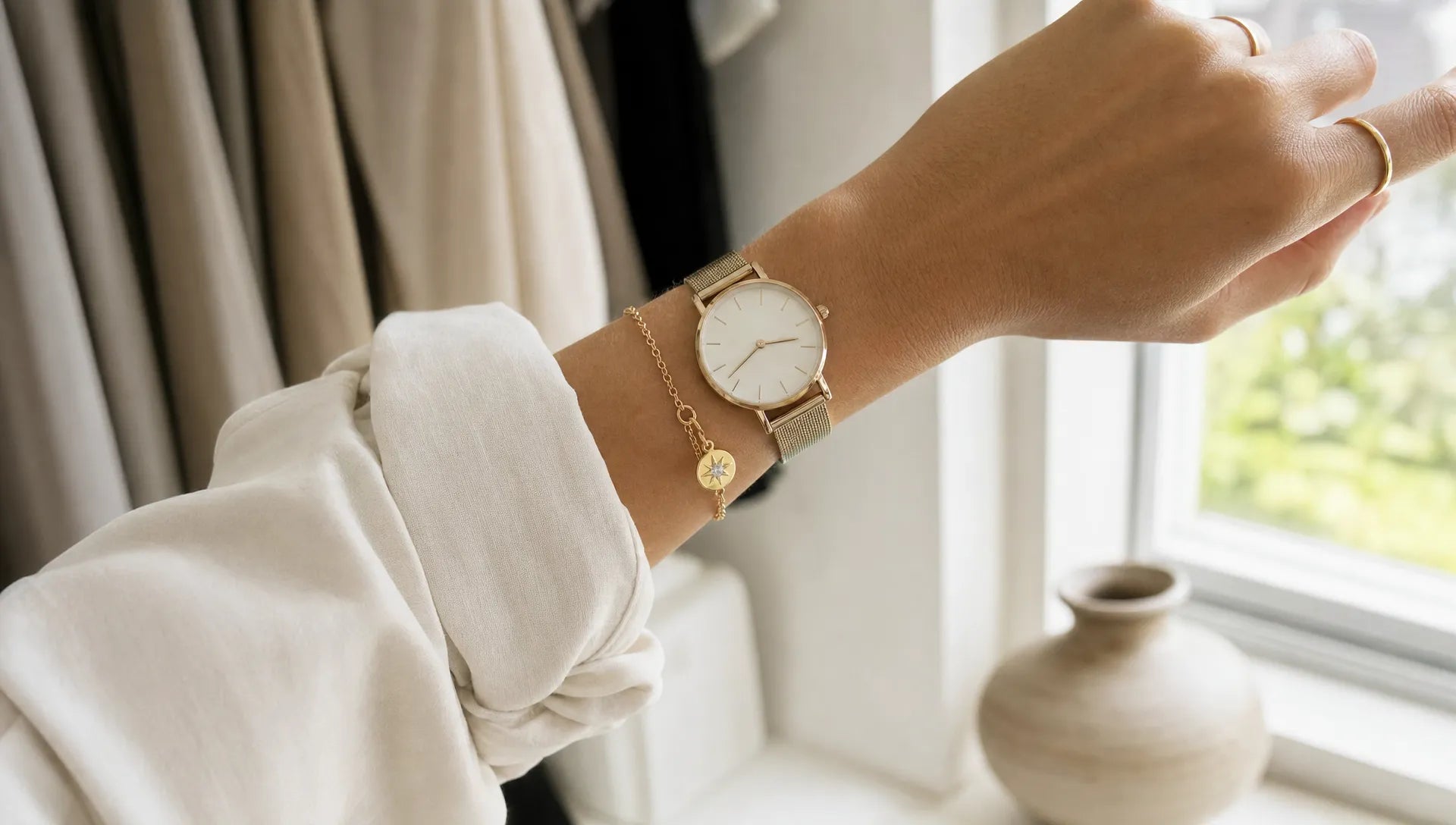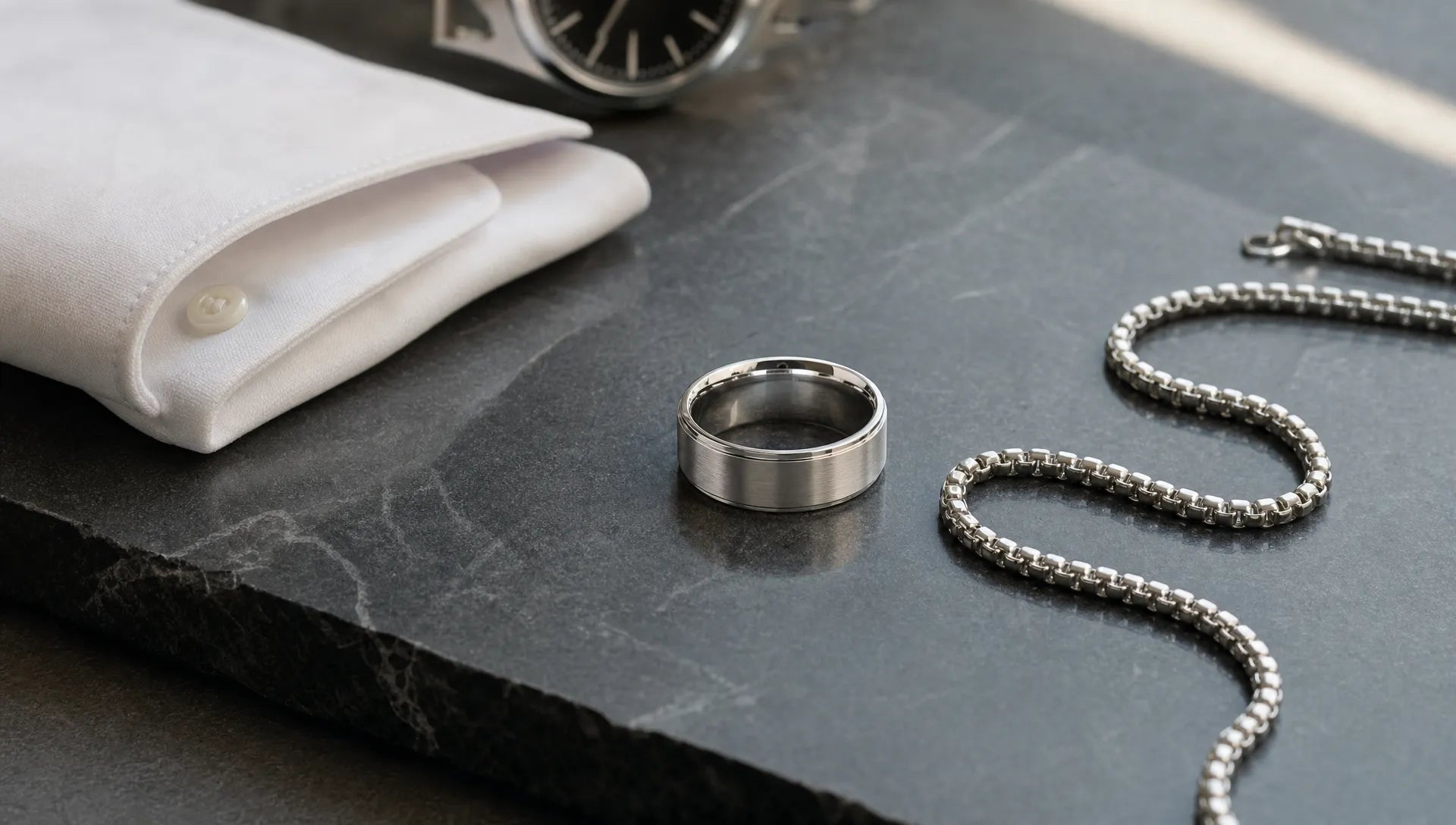

Match rings and chains harmoniously
Rings and necklaces are among the most commonly worn pieces of jewelry in everyday life. Nevertheless, they are often chosen separately from each other: the necklace matches the neckline, the rings are on hand, and that's it. However, a look only appears harmonious when the neck and hands communicate visually with each other.
This does not mean that every piece of jewelry has to come from an identical set. On the contrary: modern jewelry styling thrives on subtle differences, personal details and consciously placed contrasts. It is crucial that the metal color, shape, weight and style match. This creates a look that appears elegant without being too perfect or overloaded.
Why rings and necklaces should be planned together
A chain sits close to the face and shapes the first impression. Rings, on the other hand, are noticeable when making gestures, when holding a glass, when writing or when greeting. So both jewelry zones are very visible, just in different ways.
If the necklace is very noticeable and the hands are also heavily decorated, the look can quickly appear restless. However, if both areas are too delicate, jewelry can be lost in a strong outfit. The art lies in creating a common thread: a common metal color, a similar line, a recurring detail or a clear balance between focus and restraint.
Good styling therefore first answers three questions:
- Where should the eye land first, on the décolleté or on the hands?
- What mood should the jewelry convey, minimalist, romantic, modern or expressive?
- How much jewelry can the outfit tolerate without losing its effect?
Set the focus: chain or rings?
The easiest way to achieve harmony is to have a clear focus. If every piece of jewelry is equally loud, the neck and hands are competing with each other. When one area leads and the other complements, the entire look appears more intentional.
| Focus | Matching chain | Matching rings | Effect |
|---|---|---|---|
| Chain in focus | Statement necklace, pendant or eye-catching necklace | Narrow rings, a single accent ring | Elegant and clear |
| Rings take center stage | Fine chain, short pendant or subtle layers | Multiple rings, wide ring or ring stack | Modern and detailed |
| Balanced combination | Medium-sized chain without too much volume | Two to three harmonious rings | Suitable for everyday use and quiet |
| Minimalist look | Delicate chain close to the neck | One or two simple rings | Fine, French-inspired, timeless |
The balanced variant works particularly well in everyday life. A fine chain with a small pendant and two rings in the same metal color look neat without looking like occasion jewelry. For the evening, the focus can be stronger, for example with a striking necklace and reduced rings.
Combine metal colors consciously
Metal color is the strongest unifying factor between rings and chains. Gold, silver, rose or darker metal tones each create a different mood. If you are unsure, stick with a metal family first. This automatically seems calmer.
Silver-colored jewelry goes particularly well with clean, cool looks, white blouses, black knits, denim, gray and minimalist cuts. Gold-colored pieces appear warmer and harmonize beautifully with cream, beige, brown, olive, red or deep blue. Rosé accents can appear softer and more romantic.
Mixing is still allowed. The only important thing is that the mixing appears intentional. For example, combine a gold-colored necklace with a ring that also contains a gold-colored detail. Or wear two metallic colors on both the neck and hands instead of strictly separating them. This creates a recurring motif.
If you particularly like wearing silver-colored rings, you will find additional styling and care tips in the article above Combine and care for silver rings correctly. Many of these basic rules can also be applied to combinations with chains.
Coordinate shapes and lines
In addition to the metal color, the shape determines whether rings and chains fit together. Round, soft shapes appear different than angular, geometric or angular designs. The surface also plays a role: shiny, matt, structured, smooth or with stone trim.
A harmonious look is created when at least one design element recurs. This can be subtle. For example, a round pendant shape goes well with rounded rings. A clear, narrow chain harmonizes with fine band rings. An angular ring can accommodate a geometric chain without the two having to be identical.
These combinations help to create a calm overall picture:
- Round pendants go well with soft ring shapes and narrow band rings.
- Geometric chains have a strong effect with clear, reduced rings.
- Pearl or stone accents on the neck should be used sparingly on the hands.
- Shiny surfaces appear elegant when they are similarly present on the chain and ring.
- Textured rings often need a quieter chain so they don't compete.
The goal is not absolute equality, but visual relatedness. Two pieces of jewelry can be different as long as they speak the same language.
Proportions: Delicate, medium or striking?
Proportions are often underestimated when styling jewelry. A very fine chain can appear too weak next to several wide rings. A heavy statement necklace can quickly appear overloaded with many eye-catching rings. That's why it's worth looking at pieces of jewelry based on their visual weight.
Visual weight is created by width, size, shine, color, pendant, stone setting and number. A single wide ring can have a stronger effect than three very narrow rings. A short, solid chain can have more presence than two longer, fine chains.
If you wear a distinctive necklace, reduce your hands. A narrow ring on the index finger or a fine duo on the ring and middle fingers is often enough. On the other hand, if you layer several rings, the chain can be more reserved. A thin necklace, a small pendant or a subtle necklace creates balance.

Think about chain length and ring position together
The length of the chain influences how present it appears. Short chains and necklaces draw the eye directly to the neck and face. Medium-length necklaces with pendants visually stretch the upper body. Long chains appear more relaxed and can make outfits appear more vertical.
Rings affect hand proportions similarly. A ring on the index finger looks confident and fashionable. On the middle finger it appears central and balanced. On the ring finger it appears more classic. Small rings on several fingers look more playful, wide rings make a clear statement.
A balanced principle is: the more the chain emphasizes the upper silhouette, the calmer the ring positions should be. The calmer the neck is decorated, the more freedom the hands have.
If you want to wear several necklaces, clearly grading the lengths helps. A short chain, a medium chain and a longer pendant usually look more harmonious than three chains of almost the same length. For this style it's worth taking a look Step-by-step instructions for chain layering, especially if you also want to integrate rings into the look.
Properly balance ring stacking and chain layering
Ring stacking and chain layering are popular because they add personality to a look. Wearing both at the same time can look very stylish, but needs a clear structure. Otherwise you quickly get the impression that jewelry was randomly placed on top of each other.
The most important rule: do not create maximum density everywhere. If you wear three chains on your neck, two to four rings on your hands are often enough, spread over both hands. If you wear a striking ring stack on one hand, choose one or two fine chains on your neck.
Free spaces are also important. Jewelry needs optical space. A bare finger next to a ring stack or a simple top under several chains makes the individual pieces appear more high-quality.
A good place to start is the 2-zone rule: one zone is active, the other supports it. Active means more conspicuous, dense or distinctive. Supportive means simpler, finer or reduced. This keeps the look modern, but not overloaded.
Choose rings and necklaces to match your outfit
Jewelry never appears isolated. Neckline, sleeves, fabric, color and occasion determine which combination works. A black turtleneck tolerates different chains than a silk V-neck top. Long sleeves showcase rings differently than a sleeveless dress.
| Outfit or occasion | Chain choice | Ring choice | Styling tip |
|---|---|---|---|
| White t-shirt and jeans | Fine chain or small layering | Simple rings, preferably several | Ideal for minimalist everyday jewelry |
| Blouse in the office | Short to medium length necklace | One or two elegant rings | Calm shapes appear professional |
| Turtleneck sweater | Longer chain or striking pendant | Medium sized rings | Jewelry needs enough contrast to the material |
| evening dress | Statement necklace or elegant necklace | Reduced rings | A clear focus looks particularly elegant |
| Knit and coat | Necklace with visible pendant | Rings with a little more presence | Hands remain visible even when the neck is covered |
When it comes to eye-catching necklaces, it's worth showing restraint on your hands. If you're looking for more inspiration for striking neck accents, you can find suitable ideas in the article above Combine statement necklaces perfectly.
Incorporate personal jewelry
Many people wear certain rings or necklaces not just for style but for their meaning. A ring with a memory, a personalized necklace, a birthstone or a gift should often be worn daily. Such pieces of jewelry do not have to fit perfectly with everything, they can be the starting point of the entire styling.
In this case, choose the personal piece of jewelry as an anchor. For example, if you wear a fine necklace with a pendant every day, your rings should reflect its metal color, shape or mood. If a certain ring is your signature piece, the chain can be more subtle and not overpower it.
Personalized jewelry looks particularly beautiful when it is accompanied by clear basics. A single meaningful pendant paired with simple rings often has a stronger impact than a look with lots of competing details.
Minimalist combinations for women and men
Matching rings and necklaces harmoniously is not just an issue for women's looks. The same principles also apply to men's jewelry: metal color, proportion and style should match.
A simple stainless steel ring with a clear chain looks modern and suitable for everyday use. Wider rings go well with slightly thicker chains, while very fine chains harmonize better with reduced ring shapes. For men's looks, clear lines, matt or smooth surfaces and a few deliberately chosen pieces work particularly well.
For women's looks, the range is often wider, from delicate layering to expressive combinations. But the same applies here: minimalism does not mean boring. A fine ring stack and an elegant chain can look very feminine if the spacing, shapes and metal tones are right.
Common styling mistakes and how to avoid them
Even beautiful pieces of jewelry can appear uneasy if they are not combined correctly. The most common mistakes are easy to avoid.
Too many points of view is the classic. A large necklace, several wide rings, statement earrings and a strong bracelet can be beautiful individually, but together they can be too much. Instead, choose one main accent.
Another error is an unclear metal mixture. Gold and silver can look modern, but only if the mix is repeated. A single foreign metal color quickly appears random.
Different styles can also be difficult. A very romantic necklace with a playful pendant does not always go well with strictly geometric rings. It can work, but it needs a unifying element, such as the same color or a similarly fine proportion.
Ultimately, the jewelry should fit everyday life. Water-resistant and robust materials such as stainless steel are practical for frequent wear, but here too, conscious styling is worthwhile. Longevity does not replace visual balance.
A simple formula for harmonious combinations
If you want to quickly decide in the morning which rings and necklaces go together, a simple formula helps: a common element, a focus, a free area.
The common element can be the metal color, the shape, a stone, a pendant or the surface texture. The focus determines whether the neck or hands appear stronger. The free area ensures that the look can breathe.
Example: You are wearing a gold-colored chain with a small, round pendant. Two gold-colored rings go well with it, one simple and one with a soft curve. The chain remains the focus, the hands pick up the style. Another example: You wear several silver-colored rings on both hands. A delicate silver-colored chain without a large pendant goes well with it so that the hands can lead.
This formula creates combinations that don't look like rigid rules, but rather based on personal style.
Frequently asked questions
Do rings and necklaces have to come from the same collection? No. They should not be identical, but should harmonize. A common metal color, similar shapes or a recurring detail are often enough.
Can you mix gold and silver rings and necklaces? Yes, if the mixture works consciously. Ideally, repeat both metal colors in more than one place so the look appears planned rather than random.
Which rings go with a statement necklace? Narrow, clear rings go best with an eye-catching necklace. A single accent ring can work as long as it doesn't take away the attention from the necklace.
Which chain fits many rings? If you wear several rings, a fine chain, a small pendant or a subtle necklace looks particularly harmonious. So the hands remain the focus.
How many rings and necklaces can you wear at the same time? That depends on the style. For everyday life, one to two chains and two to four rings usually look balanced. On special occasions it can be more if there is a clear focus.
Jewelry that combines your style
Matching rings and necklaces harmoniously does not mean rigidly following rules. It's about choosing jewelry consciously: with a focus, recurring details and enough calm in the overall picture.
At LUMOIR Jewelry you will find minimalist, timeless stainless steel jewelry for women and men, inspired by light and French design. Whether a fine necklace, elegant ring or personalized piece of jewelry, choose pieces that accompany your everyday life and together create a clear, personal signature.

From Yannick Aebischer