Stainless steel earrings for sensitive ears?
Sensitive ears can quickly make the most beautiful jewelry uncomfortable. A slight tugging is still harmless, but itching, burning, redness or swollen earlobes are a clear sign: the ear is reacting to something. Often it is not the design itself, but rather the material, friction, closure, weight or residue from care products.
The good news: Stainless steel earrings can be a very good choice for many people with sensitive ears. They are robust, corrosion-resistant, easy to care for and do not tarnish as quickly in everyday life as many other metals. Nevertheless, stainless steel is not automatically perfect for every skin. What matters is which alloy is used, how cleanly the surface is processed and whether a nickel allergy is known.
Short answer: Are stainless steel earrings suitable for sensitive ears?
Yes, stainless steel earrings are often well suited for sensitive ears, especially if they are well made, polished smoothly and intended for daily skin contact. Stainless steel is resistant to moisture, sweat and everyday wear and tear. This makes it interesting for earrings that are worn regularly.
But: Anyone who has a diagnosed nickel allergy should take a closer look. Many stainless steel alloys contain nickel as part of the metal mix. Nickel is usually tightly bound in high-quality stainless steel and is only released in very small quantities. For many people this is not a problem. However, for severely sensitized skin, even a small amount of nickel release can be enough to cause symptoms.
If your ears are recently pierced, inflamed or have not yet healed completely, you should be particularly careful and follow the advice of your piercer, piercer or a dermatological practice.
Why do ears react so quickly to jewelry?
Earlobes appear insensitive, but are particularly vulnerable due to the ear piercing. An earring sits directly in a small channel in the skin. This is where metal, moisture, skin oil, sweat, soap residue and movement come together. If there is also a tight closure or a heavy pendant, the skin can become irritated.
When it comes to sensitive ears, there are two main types of reactions. An irritant reaction occurs due to friction, pressure, dryness or cosmetic residue. It can also occur with generally well-tolerated materials. An allergic reaction, on the other hand, occurs when the immune system reacts to a certain substance, for example nickel.
DermNet describes nickel allergy as one of the most common causes of allergic contact dermatitis. Typical signs include itching, redness, flaking, small blisters or weeping areas of skin. According to the American Academy of Dermatology Symptoms can occur where objects containing nickel touch the skin for a long time; jewelry is one of the classic triggers.
It is therefore important to note that not every stinging or burning sensation automatically means an allergy. Sometimes the ear stud is too tight, the back is pinching, the earring is too heavy or the ear hole wasn't dried properly after showering. Especially when it comes to earrings, it's worth considering material and comfort together.
What makes stainless steel earrings so suitable for everyday use
Stainless steel is valued for jewelry because it is stable, easy to care for and corrosion-resistant. The reason lies in its surface: Due to the chromium content, stainless steel forms a very thin protective layer, which makes the material more resistant to rust and external influences. This is why stainless steel is particularly suitable for jewelry that is worn frequently.
This is useful for earrings. They come into contact with skin oil, shampoo, perfume, sweat and sometimes water. A material that oxidizes or tarnishes quickly may require more care and may become rougher more quickly. A smooth stainless steel surface, on the other hand, reduces friction and is easy to clean.
This does not mean that stainless steel is indestructible or can never cause reactions. But it does mean that high-quality stainless steel can be much less complicated in everyday life than many more sensitive materials. Stainless steel is a sensible choice, especially for minimalist ear studs, small hoop earrings and light pendants, because the material holds its shape and surface well.
The crucial point: stainless steel is not automatically nickel-free
Many people look for nickel-free earrings if their ears are sensitive. With stainless steel, the formulation is important: stainless steel can contain nickel, but the nickel release can be very low. What is particularly relevant for the skin is how much nickel is actually released.
In the EU there are legal limits for nickel emissions from jewelry that comes into direct and prolonged contact with the skin. Particularly strict requirements apply to parts that are passed through an ear hole. Nevertheless, very sensitive people can also react to tested materials if they already have a strong nickel allergy.
If you know that you are allergic to nickel, you should take material information particularly seriously. Terms such as stainless steel, surgical steel or 316L can provide information, but do not replace an individual guarantee of compatibility. If the symptoms are unclear or severe, a dermatological examination is advisable. You can find a broader overview in the LUMOIR article about how to choose jewelry that is as low-allergenic as possible.
What you should pay attention to when buying stainless steel earrings
For sensitive ears, it's not just the metal that matters. Shape, weight, closure and workmanship also play a major role. A high-quality stainless steel earring can still be uncomfortable if it is too heavy or the back permanently presses into the earlobe.
| criterion | Why it's important for sensitive ears | What you should pay attention to |
|---|---|---|
| Material information | The more transparent the information, the better the compatibility can be assessed | Stainless steel, ideally with an exact alloy or clear product description |
| surface | Rough spots can rub the ear hole and cause micro-irritation | Smooth, cleanly polished connectors and edges |
| Weight | Heavy earrings pull on the ear hole and can irritate it | Lightweight stud earrings, small hoop earrings or huggies for everyday wear |
| Clasp | Closures that are too tight accumulate moisture and put pressure on the skin | Leave enough space between the earlobe and the back |
| Coating | A damaged coating can rub unevenly or expose underlying metal | Pay attention to good workmanship and do not carry damaged pieces |
| Return option | Sensitive skin reacts individually | A fair return policy gives more security when trying things out |
Reduced designs are often particularly pleasant. The fewer corners, edges and moving elements an earring has, the lower the risk of friction. This is one of the reasons why minimalist stainless steel earrings are so popular in everyday life.

Which stainless steel earrings are particularly comfortable for sensitive ears?
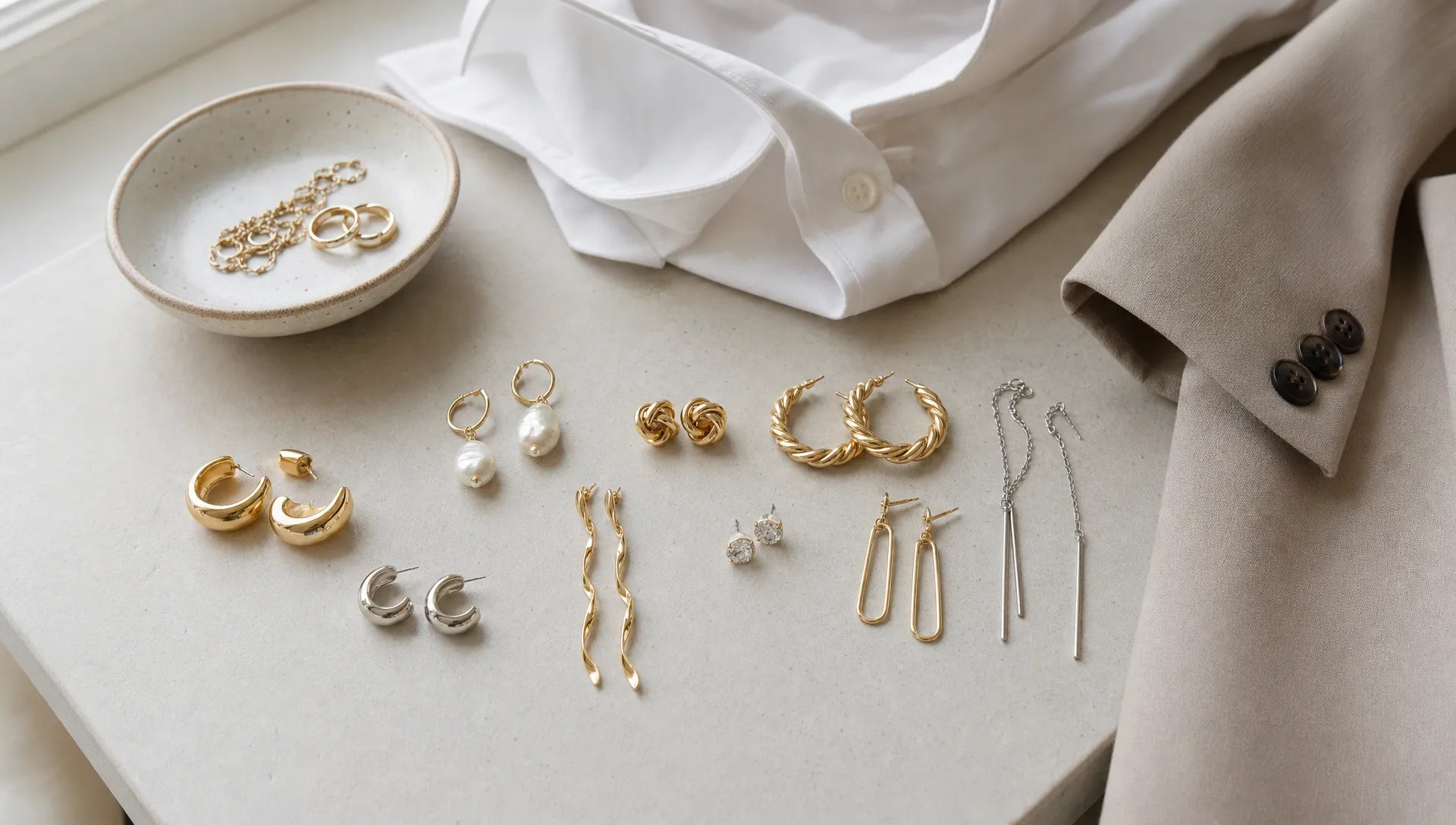
If your ears respond quickly, small, lightweight designs are usually the best choice. Stud earrings with smooth backs sit close to the ear and move little. Small hoop earrings or huggies can also be comfortable as long as the clasp doesn't pinch and the ring doesn't pull on the ear hole.
Snags and eye-catching designs are not inherently problematic, but weight counts. The heavier an earring is, the more strain it places on the ear hole. This can lead to redness even if the material is well tolerated. For long days, travel, office or everyday life, lightweight models are often more skin-friendly than large statement earrings.
The shape of the plug is also important. Very thick plugs can squeeze into narrow ear holes. Very thin or poorly made connectors, on the other hand, can appear unstable or rub unpleasantly when moved. A cleanly crafted connector with a smooth surface, rounded edges and a closure that holds securely without building up pressure is ideal.
When it comes to gold-plated stainless steel earrings, it's worth taking a look at the quality of the plating. A well-crafted surface can be comfortable to wear and provide the desired gold tone. However, if the plating is visibly damaged, becomes rough, or peels off, the earring should no longer be worn continuously, especially if you have sensitive ears.
Care: This keeps stainless steel earrings more skin-friendly
Even a good material can cause problems if sweat, cream, make-up or shampoo collect on the plug. Especially when it comes to earrings, care is not a luxury, but rather a part of skin compatibility.
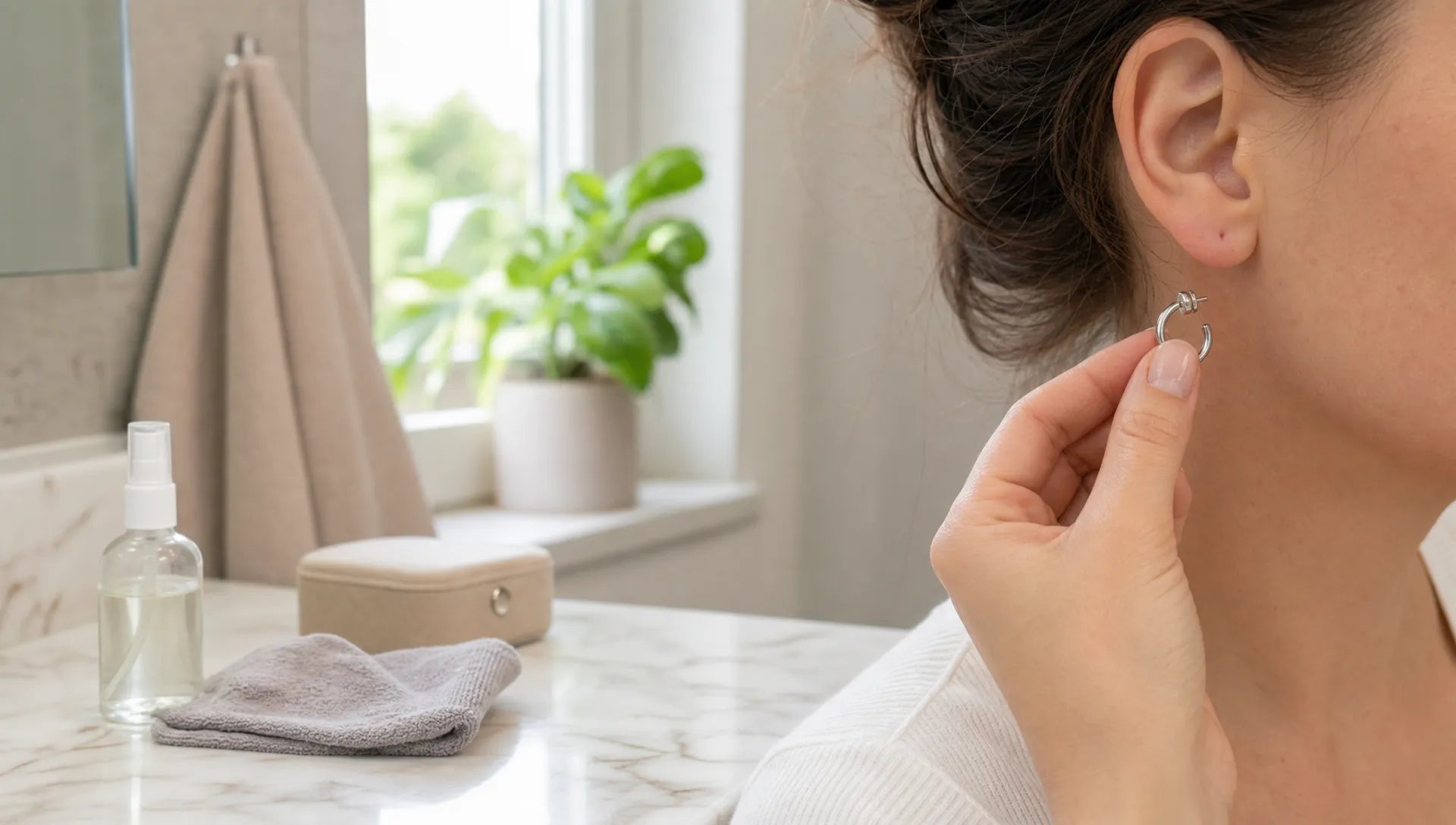
Clean stainless steel earrings regularly with a soft cloth. If necessary, you can use some lukewarm water and mild soap. The earrings should then dry completely before you put them back on. Moisture between the clasp and the earlobe can soften the skin and cause irritation.
Your dressing routine also makes a difference. It's best to put earrings on after perfume, hairspray, sunscreen or styling products have dried. This way you reduce direct contact between chemicals and the ear hole. If you are particularly sensitive, it may help to initially wear new earrings for just a few hours and slowly increase the wearing time.
A simple routine for sensitive ears might look like this:
- Before inserting earrings, wipe them briefly with a clean, soft cloth.
- After showering, allow earlobes and jewelry to dry completely.
- Do not press clasps too tightly onto the earlobe.
- If you experience itching, burning or swelling, remove the jewelry immediately.
- Do not continue to wear damaged, rough or discolored earrings in the ear hole.
If discomfort does not subside after removing the jewelry, becomes more severe, or pus, severe pain, or a feeling of warmth appears, you should seek medical advice. This is especially true for freshly pierced ears.
When stainless steel is not the best choice
Stainless steel earrings are a good option for many sensitive ears, but are not the first choice in every situation. For freshly pierced ears, many professional piercers recommend materials such as implant-suitable titanium, as it is particularly inert and is often used for initial jewelry. Always follow your studio’s care instructions.
Even if you have a confirmed, severe nickel allergy, it may make sense to switch to materials that are expressly nickel-free. These can include titanium or niobium. Although silver and gold are often perceived as high quality, they are not automatically better tolerated. Silver can tarnish and gold alloys can also contain other metals depending on the carat and mix.
If you keep getting reactions even after trying different materials, an allergy test can clarify things. Sometimes the cause is not only jewelry, but also skin care, disinfectants, hair products or an ear piercing that has not completely healed.
Style and skin comfort do not have to be mutually exclusive
Sensitive ears don't mean you have to miss out on beautiful jewelry. It is often enough to choose more consciously: a light model, a smooth surface, a comfortable closure and a material that suits your skin type.
Minimalist stainless steel earrings fit this approach particularly well. They appear calm, modern and timeless without putting unnecessary strain on the ear. Designs inspired by light, clean lines and French restraint can be worn both in everyday life and on special occasions. Especially for sensitive skin, a piece of jewelry is ideal if you don't feel it all the time.
If you like to combine things, you can start with small stainless steel plugs and later complement them with a delicate chain or a simple ring. This creates a harmonious look without every element having to be eye-catching. For sensitive ears, less is often not only more stylish, but also more comfortable.
Frequently asked questions about stainless steel earrings for sensitive ears
Are stainless steel earrings hypoallergenic? Stainless steel is often considered to be well tolerated, but is not automatically hypoallergenic. Many stainless steel alloys contain nickel, but only release it in small quantities when processed with high quality. If you have a known allergy, you should check the material information and, if in doubt, seek medical advice.
Are stainless steel earrings nickel free? Not necessarily. Stainless steel may contain nickel. What matters is whether and how much nickel is released from the material. If you specifically need nickel-free jewelry, you should look for clearly marked alternatives such as titanium or niobium.
Why do my ears itch despite stainless steel earrings? Itching can be caused by nickel, but also by pressure, friction, sweat, soap residue, perfume or a back that is too tight. Gently clean jewelry and earlobes, do not wear the clasp too tight, and see if the discomfort subsides after removal.
Can I wear stainless steel earrings every day? If your ear piercings have healed and you tolerate the material well, there is usually nothing wrong with wearing them every day. Lightweight designs, regular cleaning and breaks if the skin appears irritated are important.
Are gold plated stainless steel earrings good for sensitive ears? They can work well if the coating is high quality, smooth and intact. You should be careful if there are visible scratches, rough spots or worn coating, as sensitive skin reacts more quickly to damaged surfaces.
Conclusion: Stainless steel can be a very good choice if you choose consciously
Stainless steel earrings are often a practical, stylish and everyday option for sensitive ears. The material is robust, easy to care for and water-resistant, but individual compatibility depends on the alloy, workmanship, closure and your skin. If you have a known nickel allergy or recurring reactions, you should be particularly careful.
If you are looking for minimalist pieces of jewelry that combine modern suitability for everyday use with timeless design, you will find them at LUMOIR. Jewelry Stainless steel jewelry for women and men inspired by light and French aesthetics. Practical for the selection: LUMOIR offers water-resistant designs, secure payment methods, free shipping from 50 CHF and a 14-day return option.

From Yannick Aebischer